



Behind every stick of chewing gum is a supply chain that few people ever think about. Yet behind one of Mars' most important ingredients lies a story of long-term investment, collaboration and innovation that is helping to improve livelihoods, empower women, protect natural resources and build a more resilient supply chain.
Menthol is a critical ingredient in many of Mars' chewing gum and mint products. Around 80% of the world's natural menthol is produced in Uttar Pradesh, India, making it one of the most geographically concentrated agricultural supply chains in the world.
Mars recognized that this concentration presented a significant long-term challenge. Especially when declining crop yields, rising production costs and climate change were making mint farming less viable for many growers, threatening both farmer livelihoods and the future resilience of natural mint production.
Since 2017, Mars has invested in strengthening natural mint production through a long-term program designed to improve outcomes for farmers, communities, the environment and the business itself.
That investment became the Shubh Mint program.
Building trust from the ground up
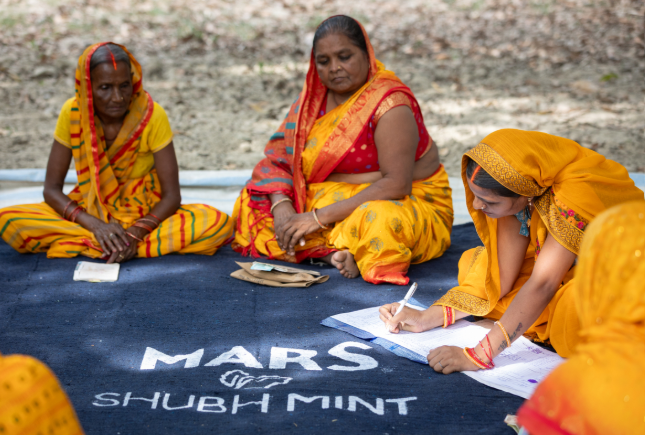
Launched in 2017 in partnership with implementation expert Tanager, the program did not begin with large-scale rollouts. Instead, Mars spent two years working alongside local communities to understand the challenges farmers faced and identify practical solutions that could deliver lasting impact.
Rather than asking farmers to immediately change the way they worked, the program introduced small demonstration plots where climate-smart farming techniques could be tested and observed. Farmers were able to see the benefits first-hand before deciding whether to adopt the new practices themselves.
This gradual, partnership-led approach proved critical. It helped build trust in communities where previous interventions had often failed to deliver meaningful long-term change, creating the foundation for a program that could grow sustainably over time.
As confidence increased, the initiative expanded from individual demonstration plots into a broader community-wide program, supported by Farmer Producer Companies and women's Self-Help Groups that strengthened local supply chains and created new economic opportunities.
Creating shared value
Today, the Shubh Mint program demonstrates how investing in resilient agricultural communities can create value across people, the planet and business.
More than 24,000 farmers have participated in the program, with incomes from mint more than doubling through improved productivity, higher-quality planting material and more efficient farming practices.
Women have also played an increasingly important role. More than 8,500 women have received training in climate-smart agriculture, while over 4,500 have participated in financial literacy and confidence-building programs through Self-Help Groups. More than 1,000 women have gone on to establish their own independent businesses, creating new sources of income for their families and communities. In all, these Self-Help Groups have provided 25,000+ loans to their members for healthcare, education, consumption, and businesses.
Alongside these social benefits, the program has delivered environmental improvements. Farmers were trained in practices designed to mitigate soil damage and reduce water consumption. These practices are designed to use less fertilizer to reduce soil degradation, meaning the environmental benefits could be measurable.
Climate-smart farming practices, including improved plant spacing, more efficient irrigation, and better fertilizer management, all while lowering production costs and improving yields. These changes not only help farmers become more resilient to climate pressures but also strengthen the long-term sustainability of natural mint production.
Strengthening the supply chain
The success of the program has extended well beyond the farm.
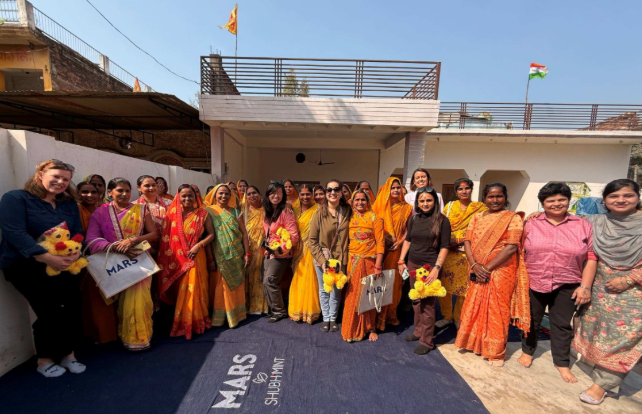
After nine years of investment and collaboration, today, Mars is systematically embedding Shubh-sourced natural menthol across its European brand portfolio.
This marks an important evolution for the program. What began as an effort to address risk within a single agricultural ingredient has become part of Mars' broader strategy to build more resilient and responsible supply chains.
It also demonstrates that long-term investment in farming communities can deliver commercial resilience alongside positive social and environmental outcomes.
The Shubh Mint program continues to evolve
Mars is now expanding the program beyond mint through a "full farm" approach, helping farmers apply climate-smart practices across multiple crops. By supporting crop diversification and year-round productivity, the program aims to reduce reliance on any single harvest while improving household resilience.
The longer-term ambition is to help participating farmers work towards achieving a verified living income, creating greater financial security for families while supporting more resilient rural communities.
As global agriculture faces growing pressures from climate change, resource constraints and increasing demand, resilient supply chains will depend not only on innovation, but also on strong partnerships with the people who produce the world's essential ingredients.
The Shubh Mint program shows what can be achieved when businesses invest for the long term. By working alongside farming communities to improve livelihoods, strengthen ecosystems and build greater resilience, Mars is helping create a model that delivers shared value across people, the planet and business and a blueprint for the future of sustainable sourcing.


