



Reflections from Sumatra on ecosystems, livelihoods and long-term partnerships
By Alastair Child, Chief Sustainability Officer, Mars Incorporated
In July, I had the opportunity to take a weeklong trip to Sumatra, Indonesia, visiting farming communities and projects supported through our long-standing partnership with the Livelihoods Funds. The Livelihoods Funds bring together businesses, NGOs, local partners and farming communities to invest in long-term solutions that strengthen livelihoods, restore ecosystems and build more resilient agricultural systems. Mars has been a partner since 2015, supporting projects across some of our most important sourcing landscapes, including coffee, palm, cocoa, coconut, vanilla and shea.
Indonesia is home to some of the world's most important agricultural landscapes and tropical forests. It is also an important sourcing region for Mars, making the long-term health of these ecosystems and the resilience of the farming communities who depend on them fundamentally important to our business.
As we flew over the Leuser Ecosystem, we were blessed with clear skies and an extraordinary view of the vast, mountainous forest below. Looking out across that landscape, I felt a real sense of hope. There is still time to protect places like this for future generations.
On the ground, the challenge felt much more immediate. Standing on degraded farms where farmers are working to stabilize soils against erosion and landslides brought home the realities they face as weather becomes more volatile. In late 2025, Cyclone Senyar brought devastating floods and landslides across Sumatra, including Aceh and North Sumatra, causing extensive damage to communities and infrastructure and a devastating loss of life.
For farming families, these environmental pressures are also economic ones. Their ability to adapt, invest in their farms and protect the landscapes around them starts with having a livelihood that allows them to do that.
Throughout the week, one lesson kept emerging. Lasting environmental progress depends on creating value for the people closest to the land. Farmers aren't adopting new approaches because they're being asked to reduce emissions or restore biodiversity. They're thinking about how to improve their farms, strengthen their incomes and create better opportunities for their families.
The opportunity is to find solutions that deliver both: helping farmers build stronger livelihoods while also reducing emissions, restoring ecosystems and protecting forests. When those solutions make economic sense, that’s when real progress can scale.
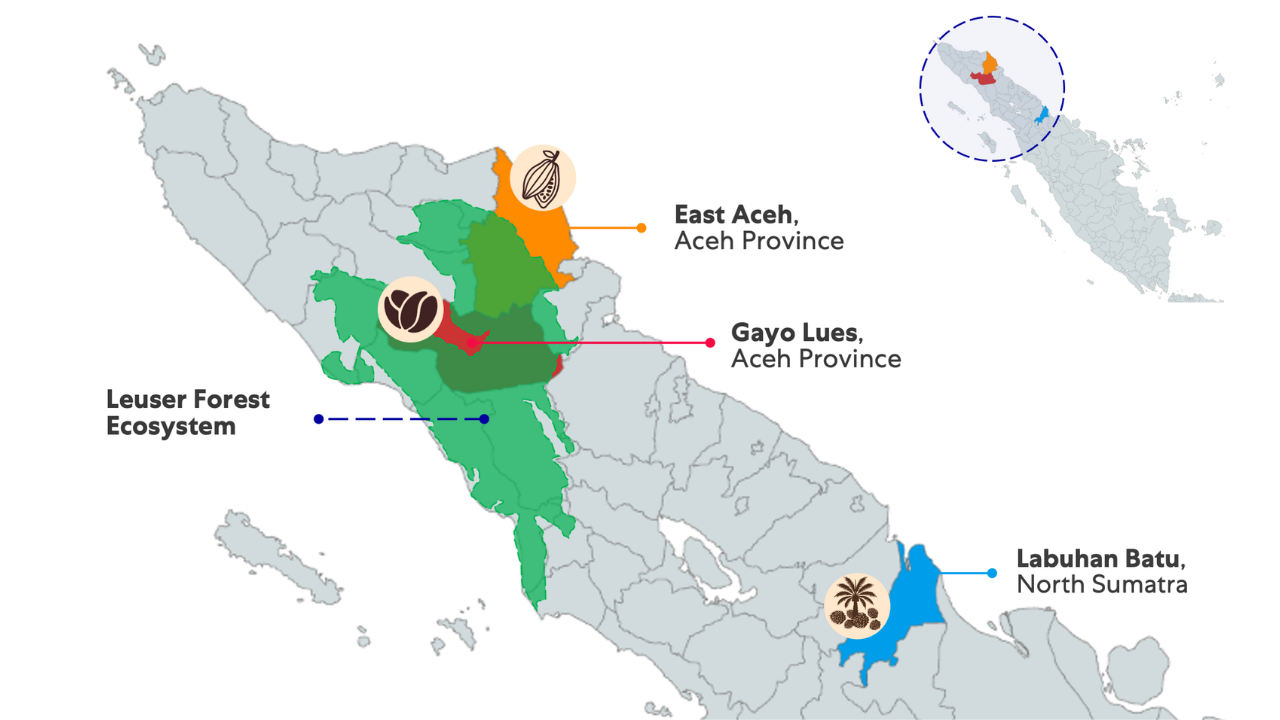
In North Sumatra, we visited a palm project supported through the Livelihoods Fund for Family Farming. When produced sustainably, palm can deliver value through the entire supply chain. Through this long-term partnership, farmers are adopting regenerative agriculture and agroforestry practices that help improve soil health, strengthen productivity and diversify household incomes, while supporting the protection of the surrounding landscape.
As we walked through the community, you could see the practical nature of the work. Starting with breeding and distribution of better performing varieties accompanied by beneficial practices such as planting density and regenerative agriculture. There were community composting initiatives that transform organic waste from local palm mills into natural fertilizer, reducing reliance on chemical inputs while improving soil health. Farmers are also integrating other crops alongside palm, creating additional sources of income and greater resilience as their farms evolve. Together, these approaches are helping farmers build stronger businesses while producing more from the land already under cultivation.
Higher productivity can help strengthen livelihoods while reducing pressure to convert additional land. It's another example of how investments in farming communities and healthy ecosystems can reinforce one another, creating benefits that extend well beyond the farm.
We also went to the Gayo Highlands in Aceh to visit the coffee farms participating in a project supported through the Livelihoods Carbon Fund.
For many years, coffee growers were encouraged to cultivate coffee in full sun to maximize production. Over time, however, that approach has contributed to soil degradation, erosion and increasing vulnerability to a changing climate. Through this partnership, farmers are reintroducing shade trees, including fruit and timber species, creating agroforestry systems that more closely reflect the natural forest ecosystem.
The benefits extend well beyond carbon. Shade trees help regulate temperatures and improve soil health while creating additional sources of income through fruit and timber. By improving productivity on existing farmland, they also help reduce pressure to expand into neighboring forests, protecting the globally significant Leuser Ecosystem that surrounds these communities.
Restoring ecosystems isn't separate from supporting livelihoods. In many cases, it's exactly what helps farming communities become more resilient over the long term.
Alongside our visits to the coffee and palm projects, we also spent time with colleagues working across our cocoa supply chain, where we saw another example of how creating economic opportunity can help drive lasting change.
Mars has long invested in cocoa science, from developing higher-performing genetic varieties to advancing modern farming techniques. But innovation only creates impact if it reaches the farmers who can put it into practice.
The Cocoa Doctors training program helps develop local agricultural entrepreneurs who provide technical advice and services to cocoa-growing communities. Rather than relying solely on traditional farmer training, the model creates local village enterprises. Cocoa Doctors earn an income by providing quality planting material and services to farmers, while farmers benefit from access to expertise and practices that can help them improve yields and strengthen their own livelihoods.
It's a model built around creating value throughout the system. When farmers can produce more from the land they already manage, they have the opportunity to earn more without expanding into surrounding forests. And when local entrepreneurs can build viable businesses by helping those farmers succeed, knowledge and innovation have the potential to spread further and faster.
"We have always believed that lasting success comes from thinking for generations, not quarters. Visiting these projects in Sumatra reinforced that meaningful progress is built through long-term partnerships that strengthen farming communities, protect and restore ecosystems, and create shared value for everyone involved. That's exactly why partnerships like Livelihoods matter. They help build the resilient agricultural systems that people, communities and businesses all depend on."
— Victoria Mars, Chair, Livelihoods Fund for Family Farming
None of the progress we saw in Sumatra would have been possible through the efforts of a single organization.
That's why Mars has invested in partnerships like the Livelihoods Fund for more than a decade. We helped co-found the Livelihoods Fund for Family Farming in 2015 because we recognized that transforming agricultural supply chains requires long-term investment, collaboration and a willingness to learn alongside farmers, suppliers, NGOs and local communities.
More broadly, we know the race to net zero isn't a race we want to win alone. There is little value in being a 1.5°C-aligned company operating in a world that is 4°C warmer. We only succeed if we make progress together. That means developing solutions that can scale, and for that to happen, the economic argument needs to be as compelling as the environmental one.
I left Sumatra with a renewed sense of optimism. We have a tremendous amount of work ahead of us, but we also have the knowledge, partnerships and opportunity to make progress.


