



Our Global Food Sustainable Sourcing Lead on farmers, rice and climate-smart agriculture
Every pouch of rice starts in a field. Before it reaches a kitchen cupboard, a microwave or a family dinner table, someone has planted it, watered it, protected it and harvested it, often while facing changing weather conditions, rising costs and an uncertain future.
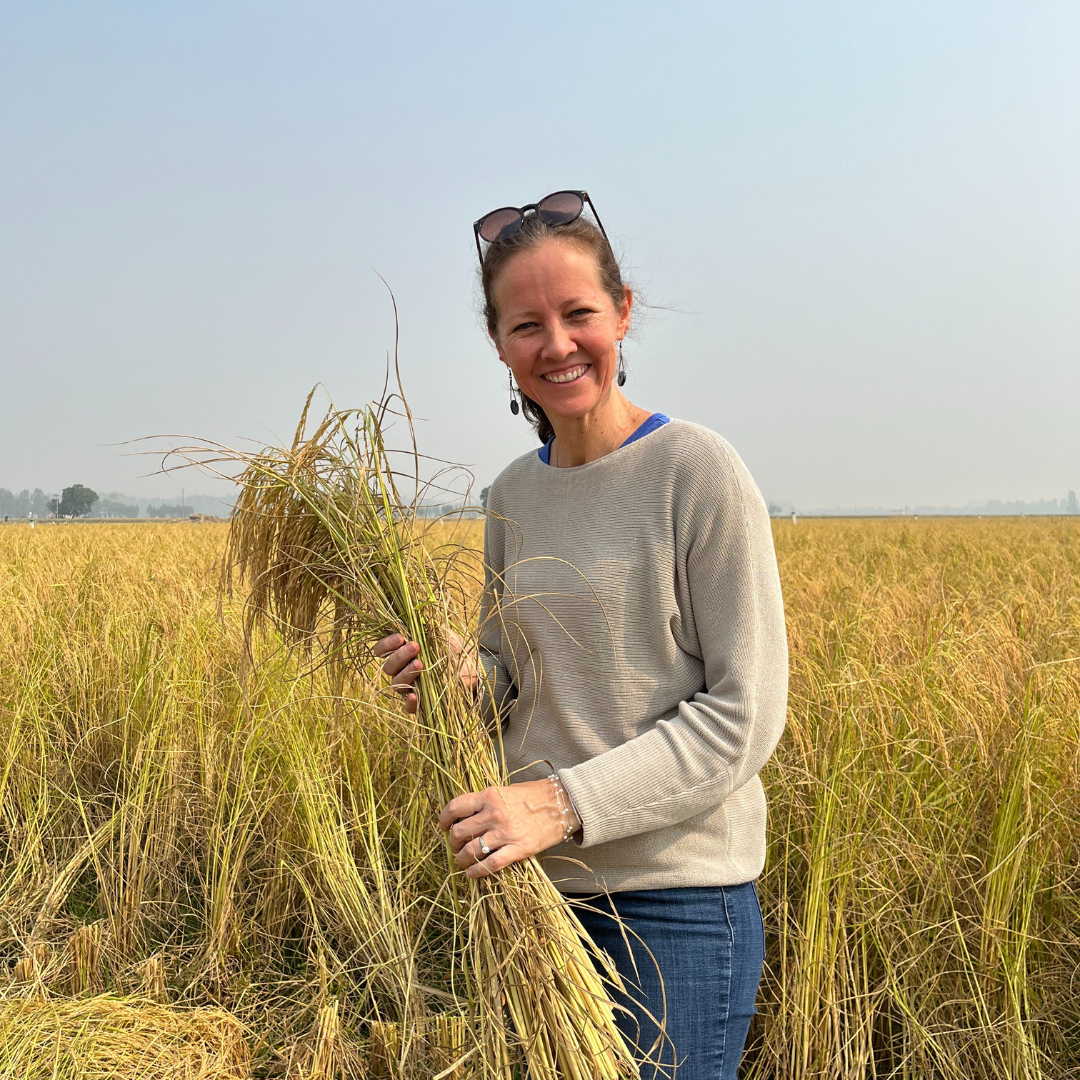
Rice feeds more than half the world’s population every day1, and 144 million farmers1 depend on it for their livelihoods. At Mars Food & Nutrition, it’s also one of our most important ingredients. That’s why, between 2020 and 2030, we’re investing $20 million (USD) in sustainable rice sourcing through our Raising Rice Right platform, helping farmers adopt and scale climate-smart agriculture2 practices that can reduce irrigation water, reduce emissions and build more resilient livelihoods.
One person behind this work at Mars is Inge Jacobs, Global Food Sustainable Sourcing Lead for Mars Food & Nutrition. With a career shaped by human rights, community development and years spent alongside farmers across three continents, Inge brings a simple question to everything she does: what does this mean for the farmer? Here, she shares what she’s learned in the field and where she believes real change will come from.
Q: What is Raising Rice Right, and why does it matter?
Inge: Rice is fundamental to our Food & Nutrition Segment. It’s one of our largest ingredients by volume, and it’s where we have our biggest footprint, both in terms of climate impact and in the number of farmers involved. So, this is where we can have the biggest impact and contribute to our broader Mars sustainability goals.
Raising Rice Right isn’t a single program. It’s a platform that brings together all the work we do on rice sustainability. At its heart, we’re supporting and training farmers to grow rice in a more climate-smart way by adopting practices designed to use less irrigation water, fewer pesticides, and emitting less methane.3
In addition to working with farmers and our suppliers on changing rice growing practices on the farm, we also have a big influencing role to play. When Mars shares research or insights on rice sustainability, other companies see that and may be inspired to follow suit. We buy only a small amount of the world’s rice. Much of it is grown and consumed locally in places like Thailand, Vietnam or China. If our work encourages others to act too, the impact can go far beyond our own supply chain.
Q: What makes it hard for farmers to adopt climate-smart practices?
Inge: One of the biggest barriers is fear that a crop might fail as a result of changing certain practices on the farm. Many farmers are generational farmers, implementing the same agricultural practices as their parents and grandparents. What we’re aiming for is behavior change, and that’s never easy, especially when one harvest a year might be your entire income.
Take the climate-smart agriculture practice known as “alternate wetting and drying”, or AWD. Farmers are typically used to keeping their rice fields flooded from planting to harvest. AWD requires the farmer to drain the fields two or three times during the season, which reduces irrigation water and methane emissions.4 But it’s fundamentally different to their usual practice, and farmers sometimes fear this could lower their rice yields. The real impact comes when early adopters share their positive experience with neighbors, creating a ripple effect of more resilient rice farming across communities.
Not every practice works everywhere, either. Where there’s heavy rainfall, AWD may not be possible. Farms that rotate rice with soy or corn (or other crops) can’t always level their fields the way rice-only farms can, for example. So, it’s important that we work in partnership with the farmers and offer farmers a “menu” of the more climate-smart agriculture practices and let them decide what makes sense for them and their farm. If it doesn’t make business sense, it won’t stick.
Finally, cost can be a barrier too. Some practices are cheap, but others, like precision-leveling rice fields, aimed at holding water more effectively, means investing in different equipment. There can also be a knowledge gap: farmers can’t adopt something they’ve never heard of. That’s why we share research, and why we offer some farmers incentives to help offset some of the initial investment of trying something new.
Once farmers see the results, they keep going. In our rice programs in India and Pakistan, farmers are still using AWD even after the programs have ended, because they see the savings in water and pumping fuel, and have even seen their yields increase.
Q: Are female rice farmers facing similar challenges as their male counterparts?
Inge: In Thailand, for example, many rice farmers are women. But women often carry many other responsibilities at home and with their children, so they have less time for training on climate-smart agriculture practices, or the training is scheduled when they simply can’t attend. Where women are doing the farming, we need to make sure they have equal access to knowledge and financial support, so they can be just as successful as their male counterparts.
The Sustainable Aromatic Rice Initiative (SARI) in Thailand illustrates this beautifully. In 2018, Mars and the German agency for international cooperation GIZ, alongside like-minded partners, joined forces to develop a collective approach to more sustainable rice production across two provinces in Thailand. Through the program, we trained more than 1,400 farmers – 66% of whom were women. Practices included the use of digital farming solutions, record keeping, water management practices, and efficient fertilizer use. As a result of implementing these practices, the farmers increased their rice production and reduced their water usage.5
Q: What do you wish people knew about the rice they eat?
Inge: Most people have no idea where the ingredients in their food come from. One of the most fascinating things I’ve learned in this job is how complex supply chains are. You pick up a pouch of Ben’s Original™ at the store and heat it for your meal, but there’s so much work behind it: where the rice was grown, the climate pressures the farmer faced, the decisions they made to bring in a good harvest and the practices they implemented to produce high quality rice that meets the needs of buyers, and so on.
When I visit farms, I like to ask farmers what a day in their life looks like. When do they wake up? What do they do? What about the kids? The answers are fascinating. Farming is hard work. I want people to understand and appreciate the farmers’ work behind their favorite meals.
Q: Is there a common thread among the farmers you meet?
Inge: Farmers have very similar hopes and dreams and are eager to innovate. If a new practice will help them make savings or protect their irrigation water, they’re keen to try it, especially if someone is there to help them along the way. That’s where we at Mars have a key role to play.
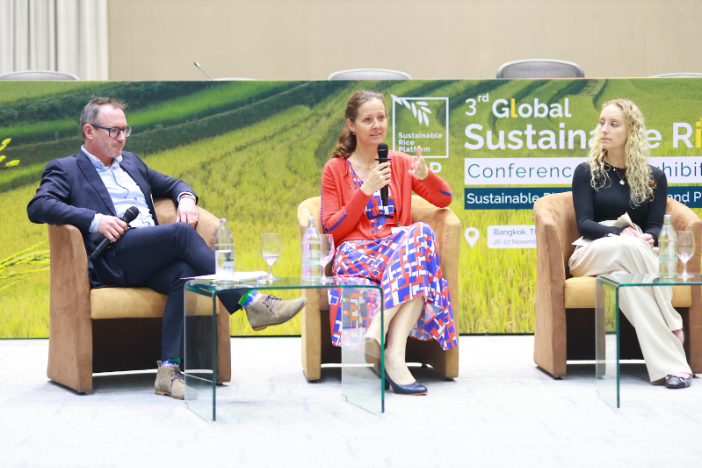
Q: What will drive the biggest transformation?
Inge: We all have to join hands across the food industry – farmers, academia, NGOs, private companies, implementation partners, governments – we all have a role to play.
Our Raising Rice Right platform isn’t just about helping farmers apply climate-smart agriculture practices, but helping farmers improve crop yields, find income security, and bolster livelihoods. Practices are proven and ready to scale, but to reach that full potential – it takes coordinated effort.
That’s why, through our Raising Rice Right platform and investment, we’re incentivizing water-saving and low-emission practices. We’re investing in training, equipment, and infrastructure that can lower the barriers to adopting these practices. And we’re working with NGOs and governments to co-fund regional programs that aim to reach more farmers.
Our work continues to go beyond securing supply; we’re working to improve the resiliency of rice farming for generations to come.
References:
- Food and Agriculture Organization of the United Nations (FAO). (2023). Rice Market Monitor. Rome: FAO. (p. 9) (p. 1)
- Mars Climate Smart Agriculture Definition - Unless expressly noted otherwise, all references to “climate-smart” agriculture practices refer to practices that support agricultural transformation to reduce and remove GHG emissions; regenerate soils and support biodiversity; and/or adapt to increasing climate hazards.
- World Bank Group, Climate Smart Agriculture: https://www.worldbank.org/en/topic/climate-smart-agriculture
- International Water Management Institute, Explainer: Alternate Wetting and Drying irrigation technique: https://www.iwmi.org/news/explainer-alternate-wetting-and-drying-irrigation-technique/
- Mars Sustainable in a Generation Report 2024, page 32.


